

The EJU Past Papers are one of the most essential study resources for students planning to appear for the Examination for Japanese University Admission for International Students (EJU). These papers help you understand the real exam structure, question format, difficulty level, and time management strategy required to succeed in the test.
If you are preparing for Japan 2026 admissions, then practicing EJU exam past Papers PDF along with official guidelines is the smartest way to build strong preparation from the beginning.
s structure, and preparation guidelines.
The EJU Past Papers are actual previous year question papers released by JASSO (Japan Student Services Organization). These papers are designed to help international students understand the real exam environment.
They include questions from:
By practicing these, students can clearly understand exam difficulty and question patterns.
Students preparing for Japan admission should also check the upcoming EJU June 2026 exam details to understand the latest schedule and preparation strategy.
Using EJU Past Papers is one of the most effective strategies for scoring high marks in the exam.
Past papers show exactly how questions are structured in the real exam.
Solving full papers helps students manage time effectively during the actual exam.
Repeated questions help you identify important areas in EJU Physics Syllabus, Mathematics, and Japanese language.
Regular practice reduces fear and increases confidence before the final exam.
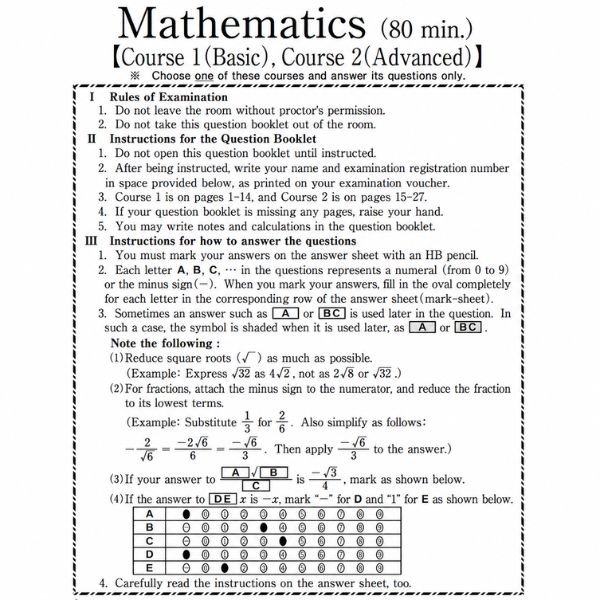
Below are the official and trusted resources for EJU preparation:
These links include authentic EJU question Paper in English, exam rules, syllabu
Students often search for EJU exam past Papers PDF for structured preparation. These PDFs include:
You can also use:
These materials are highly useful for step-by-step preparation.
For those planning to work in Japan along with studies, it is important to read about the SSW visa Japan from India process for complete eligibility and application guidance.
Mathematics is one of the most important scoring subjects in EJU.
Useful resources:
Key topics:
Consistent practice of EJU Past Papers improves accuracy and speed.
Physics requires conceptual clarity and problem-solving skills.
Recommended resources:
Important topics:
Understanding the EJU Physics Syllabus is very important for scoring well.
Language aspirants waiting for results should also track updates on JLPT December result announcement to stay informed about score release timelines.
The Japanese section tests reading, grammar, and comprehension skills.
Practice includes:
Solving past papers helps you understand real exam-level Japanese language usage.
The latest EJU Past Papers 2025 and expected 2026 exam pattern show important changes:
Students should practice updated papers regularly to stay aligned with exam trends.
Many students search for EJU question Paper in English to understand concepts more clearly.
While the official exam is mainly in Japanese, English-supported materials help beginners in:
This is especially helpful for first-time applicants.
Students looking for classroom learning can explore Japanese Language Course in East Delhi for structured training and exam-focused preparation.
Students should also carefully study official guidelines before preparing. The complete instructions, rules, exam format, and eligibility details are available here:
www.studyinjapan.go.jp/en/_mt/2024/10/eju_guide_en.pdf
This official guide explains:
Reading this is important before starting serious preparation.
Here are some sample questions similar to real EJU exam level:
Here are updated-style sample questions:
Solve:
4x + 6 = 22
A) 3
B) 4
C) 5
D) 6
Answer: B) 4
For better practice, candidates should solve the EJU Exam November Question Paper to understand real exam-level questions and difficulty patterns.
Which law explains resistance, voltage, and current relationship?
A) Newton’s Law
B) Ohm’s Law
C) Pascal’s Law
D) Hooke’s Law
Answer: B) Ohm’s Law
What is the meaning of “図書館”?
A) School
B) Library
C) Hospital
D) Market
Answer: B) Library
These are similar to real patterns found in EJU Past Papers.
To succeed in EJU:
This structured approach ensures high performance in the exam.
For serious EJU preparation, proper guidance is very important. TLS - The Japanese Language School provides structured training for students aiming to study in Japan.
TLS offers:
With the right mentorship, students can significantly improve their chances of success in the EJU exam.
It is also useful to review official updates about EJU Exam November Date and Time so that students can plan their preparation timeline effectively.
Visit Us
2/81-82, 2nd Floor, Lalita Park, Gali No - 2,
Laxmi Nagar, New Delhi - 110092
Call Us
+91 8700956038
Email Us
tls@teamlanguages.com
The EJU exam is considered moderately to highly difficult depending on the student’s preparation level. It tests not only memory but also understanding, speed, and application skills. Subjects like Mathematics and Physics can be challenging if concepts are not clear. However, with regular practice of EJU Past Papers, difficulty becomes manageable.
Students who practice consistently and follow a structured study plan find the exam easier over time. Proper guidance and revision make a huge difference in performance.
A good EJU score depends on the university you are targeting in Japan. Generally, top universities expect higher scores, especially in Mathematics and Science subjects.
A competitive score usually falls in the higher percentile range. Scoring well in Japanese language also plays a key role. Consistent practice of EJU exam past Papers PDF helps students understand scoring patterns and improve performance.
The higher your score, the better your chances of admission to prestigious universities in Japan.
To prepare for EJU effectively, students should follow a structured approach. Start with understanding the syllabus, especially subjects like Mathematics and Physics.
Use resources like EJU Mathematics book PDF, EJU Physics past Papers, and official sample papers. Regular practice is very important.
Solve EJU Past Papers under timed conditions, revise weak topics, and take mock tests weekly. Combining self-study with expert guidance improves results significantly.
If a student fails the EJU exam, they can always reappear in the next exam cycle. There is no limit on attempts, so students have multiple opportunities.
Failure usually indicates gaps in preparation, which can be improved by analyzing mistakes and revising weak subjects. Practicing EJU Past Papers regularly helps avoid repeated failure.
Many students succeed in their second or third attempt with better preparation strategies and focused study plans.
EJU Past Papers are extremely important, but they are not enough alone. They help you understand exam patterns and question types, but conceptual learning is also necessary.
Students should combine EJU Past Papers, textbooks, and mock tests for complete preparation. Especially subjects like Physics and Mathematics require strong theory understanding.
Additionally, aspirants should read detailed information about the EJU Exam November to understand exam structure, subjects, and requirements before applying.
Ideally, students should solve multiple past papers at least 2 to 3 times before the exam. The first attempt helps you understand mistakes, the second improves speed, and the third builds confidence.
Regular practice ensures better accuracy and time management during the actual exam.
The EJU exam is mainly conducted in Japanese, but some reference materials and explanations are available in English.
Students often use EJU question papers in English resources for understanding concepts. However, improving Japanese language skills is essential for success in the exam.
Most students find Mathematics and Physics to be the hardest subjects in EJU. These subjects require strong conceptual understanding and problem-solving ability.
Regular practice using EJU Physics past Papers and Mathematics guides helps reduce difficulty over time.
Some universities in Japan offer alternative admission routes, but most top universities require EJU scores. It is highly recommended to appear for EJU to increase admission chances.
A good score improves your chances of getting scholarships and better universities.
Ideally, students should start preparing at least 6 to 12 months before the exam. Early preparation allows enough time for concept building, revision, and practice of EJU Past Papers.
Starting early increases confidence and improves overall performance in all subjects.
The EJU Past Papers are one of the most powerful tools for exam preparation. They help students understand real exam patterns, improve speed, and strengthen conceptual knowledge. Whether you are using EJU Physics past Papers, EJU Mathematics book PDF, or official JASSO resources, consistent practice is the key to success.
Along with official guidelines and structured preparation, students can confidently aim for top scores and secure admission to Japanese universities.
Start practicing today and build a strong foundation for EJU 2026 success.
If you are serious about studying in Japan, then EJU Past Papers practice alone is not enough. You need the right strategy, updated study material, and expert mentorship to maximize your score. Consistent practice with official papers, understanding the EJU Physics Syllabus, and following structured preparation can completely change your results.
For professional guidance, structured Japanese learning, and EJU-focused preparation, join TLS - The Japanese Language School, where students are trained step-by-step for success in Japan university admissions.
Study smartly, stay consistent, and focus on securing admission to top universities in Japan.


